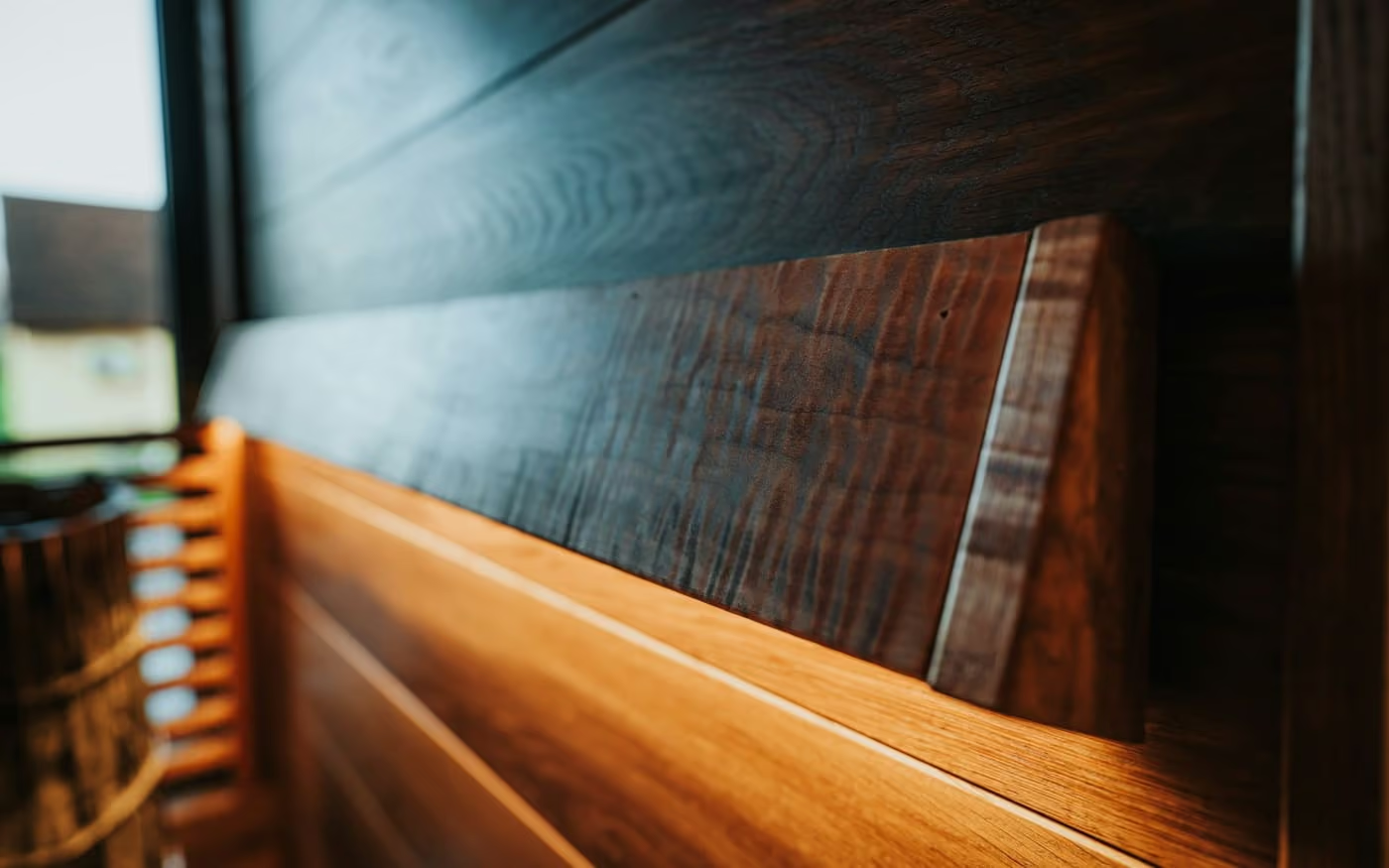
Material is the first real decision in any cabinet project, and in South Florida it carries more weight than it does almost anywhere else. Between year-round humidity, salt air near the coast, and air conditioning that cycles constantly, cabinetry here is asked to hold its shape under conditions that would be unusual in most of the country.
Solid wood is the traditional answer, and it's still the right one for doors, face frames, and anything with a machined profile. It takes stain beautifully and can be repaired decades later. Where it needs respect is in wide flat panels — solid wood moves with humidity, so a five-foot slab door in solid stock is asking for trouble. We use it where its strengths matter and engineer around it where they don't.
Veneer over a stable core gives you real wood grain on a panel that stays flat. For large door faces, tall pantry fronts, and paneled walls, this is usually what we recommend. You get the look and the grain match of solid timber without the seasonal movement, and a good veneer layup is indistinguishable from solid at arm's length.
MDF is the quiet workhorse of painted cabinetry. It machines cleanly, holds a crisp profile, and takes paint better than any solid wood will — no grain telegraphing through the finish, no joint lines opening at the miters two summers later. For painted shaker or flat-panel doors, MDF is often the better product, not the cheaper compromise.
Laminate and thermofoil earn their place in laundry rooms, garages, closets, and commercial casework where durability and cost matter more than grain. Modern laminates have come a long way, and for a rental unit or a high-traffic office they will outlast a painted finish by years.
The honest answer is that most good kitchens use more than one material — solid wood where it's seen and touched, engineered panels where stability matters, and laminate where it takes a beating. That's the conversation we have at every consultation. Call MK Design US LLC at (786) 906-7494 and we'll bring samples to the walkthrough.